Patient Information

Hip osteoarthritis (OA)
Print this page

Information in this booklet is intended to be used as a guide. It gives you an idea about how hip osteoarthritis (OA) can be managed.
You should remember that every case is different, and symptoms and management can vary from person to person.
Osteoarthritis (OA) is often shortened to arthritis. It can happen in lots of joints in the body and it is a normal part of the ageing process. However, it is common in the hip joint. It affects many people and develops gradually over time. It is more common from our late 40s and onward.
Symptoms are very variable but can include stiffness, pain and activity restriction.
Hip OA is commonly diagnosed from your signs and symptoms; x-rays may be requested in some cases. There is no cure for hip OA but there are many simple interventions and treatments that can improve, minimise and manage your symptoms.
Treatment options include simple exercise and diet, pain relief, activity modification, and, in some cases, total hip replacement.
What is osteoarthritis?
This is a common cause of hip pain. As we age, most of us will develop osteoarthritis in some of our joints (normally from our late 40s or 50s) and it is most frequently seen in weight-bearing joints, such as our hips and knees.
It can be helpful to think of OA as an extension of the body’s repair process, which takes place in joints that are stressed or injured. Most of the time this allows the joint to work normally, but in some, it may result in pain and stiffness.
In a non-arthritic hip joint, a coating of cartilage covers the surfaces of the two bones in the hip. These are surrounded by a thin lining which produces a fluid to help the joint move freely.
As a result of injury or stress, the smooth cartilage in the joint thins and the protective space between the bones decreases.
In response to this, extra bone is produced. The extra bone forms around the joint are called ‘spurs’ on an x-ray. These changes are often painless and the joint repairs itself well. However, on other occasions, the repairs are less successful, and you could experience ongoing symptoms, such as pain, swelling and giving way.
In more severe cases, the cartilage can become so thin that it no longer covers the ends of the bones, resulting in a narrow joint space.
Why me?
There are a variety of factors that can contribute to OA, such as:
Previous injury - a common injury to the cartilage makes developing arthritis more likely.
Genetics - OA often runs in the family.
Other joint diseases.
Age-related changes - late 40s onwards. A combination of muscle weakening and a reduction of healing ability over time.
Being overweight - increased force goes through the joint. Fatty tissue can also raise inflammation, which can contribute to OA.
Symptoms
Some people with hip OA on an x-ray can be pain and symptom free. Therefore, x-rays are not always helpful in predicting how much pain or restriction you have.
You may also find your symptoms vary for no obvious reason; having good or bad periods lasting for weeks or months. The main symptoms of OA of the hip include:
Stiffness and restriction. Movements that are often limited include bending and twisting, such as tying your shoelaces or getting in and out of a car.
Pain. The pain with hip OA is often felt in the groin, outer hip or buttock, but can extend down to the thigh. Some patients also have knee pain (this is known as referred pain).
As the joint may not move as freely as normal, you may experience crackling or grating sounds as you move it. This is called crepitus.
These symptoms can result in a restriction of normal activity, such as walking or sports. Therefore, a loss of fitness and strength is common.
You may find your symptoms are more pronounced at the end of the day or after a prolonged period of rest. In other cases, your symptoms are more obvious when you are using the joint.
In the early stages of OA, symptoms can be intermittent. As OA worsens, symptoms can become more frequent or severe and start to limit your activity and disturb your sleep.
Diagnosis and investigations
Osteoarthritis (OA) is often diagnosed from the signs and symptoms that you describe. Assessment of the hip, knee and lower back by a healthcare professional may help to inform this diagnosis.
X-rays are not always needed to make a diagnosis; they may show the extent of the OA, but they do not indicate how much pain you should be in. Someone with a lot of changes on an x-ray may have less pain than someone with only mild changes on x-ray. Requesting an x-ray is therefore not essential.
There are no blood tests to diagnose OA and MRI scans are not more useful in this instance.
Will it get better?
Typically, OA can present days where there are very few symptoms and other days which are more difficult to manage. Some people may manage symptoms well for a long period of time and then experience a flare of symptoms.
There is no cure for OA, but there are many ways that you can manage it to help improve your symptoms.
We work with a team of advanced clinical practitioners and orthopaedic consultants who can review your case if symptoms do not improve within an expected period of time.
Steroid injections are sometimes used to aid physiotherapy exercises. They offer a window of opportunity for a reduction in symptoms to allow participation in the exercises.
Injections are only offered alongside physiotherapy.
Management
OA is treated with a variety of different management techniques. Below is a list of ways in which you can help yourself:
Heat: Using heat on the muscles around your hip joint can help to ease the pain and increase blood flow to the area to help repair. A hot water bottle or heat pack may be useful. Take care when using heat to avoid burns to the skin.
Ice: Applying ice packs or a bag of frozen vegetables to the hip joint itself can reduce swelling in the area. Do not apply directly to the skin and avoid applying for more than 10 minutes at a time.
Pacing: Break up the big tasks of the day if you find them painful. Make sure to rest your hip regularly and slowly build up your tolerance of the tasks you find difficult. Try and avoid doing too much in one day, if it would result in being off your feet the following day.
Sleep hygiene: A lot of evidence shows how a good night’s sleep can reduce pain levels. Try to get between six and nine hours consistently. Try relaxation before you go to sleep.
Stress management: Being stressed can increase pain. Make sure to take time for yourself, you could use techniques such as mindfulness. Speak to a healthcare professional for more help if you need.
What to avoid
OA joints do not like to remain still for long periods of time, and this can often explain why joints feel ‘stiff’ when getting up after lots of sitting. It is therefore important to stay active and keep your muscles strong to support the joint.
Medication for pain control
Controlling your pain allows you to continue to function and carry out your daily activities more comfortably.
Your GP may have already discussed medication to help with your pain and the correct ways to take pain relief. They may recommend that you take it as a short course rather than ‘as and when’ the pain is bad. This often includes paracetamol, co-codamol (Zapain), and non-steroidal anti-inflammatory medication such as ibuprofen. Please always read the instructions before using these products.
Self-management
Lifestyle changes and exercises are an effective way to help improve your OA symptoms:
Weight management: Our hips and knees bear a lot of our weight when we do daily tasks. Therefore, losing weight will reduce this load and improve your symptoms.
Nutrition: A healthy, balanced diet will not only help you lose weight, but it can also reduce levels of swelling and pain. Foods high in vitamin D are particularly recommended, such as fish and mushrooms.
Footwear: Wearing the appropriate shoes, with cushioned soles, can act as shock absorbers for the painful hip.
Exercise: Finding the right balance of exercise is essential to managing OA.
Doing too much or too little can worsen symptoms. Little and often is a good place to start and build up gradually.
Strengthening exercises are important to build muscle strength and support the hip joint to reduce the chances of the disease progressing.
Balance exercises also play a key role in feeling stable, which is vital for falls prevention in later life.
Exercises
The following are some exercises that will help you build your strength and improve your balance. Some discomfort with exercise is to be expected, but this should ease within a short period of time.
Aerobic exercise and activities, such as brisk walking and swimming, can assist with general health and weight loss. It also releases endorphins, which are the body’s natural pain relief. It is important to find an aerobic exercise that you enjoy, as to get the best outcomes, you will need to continue with it long-term.
Lifestyle changes and exercise will not provide a quick fix. It will require several months of consistent effort before we expect to see true improvements. Try not to become disheartened.
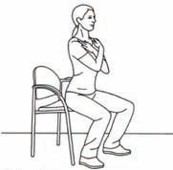
Sit with your hands on your shoulders.
Slowly stand up, then slowly lower yourself back down to the chair.
Repeat ten to 15 times.
Complete two to three sets.
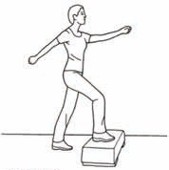
- Stand in front of a 20 - 40 cm step.
- Step up with one leg leading 15 to 20 times.
- Repeat with the other leg leading.
- Complete two to three sets.
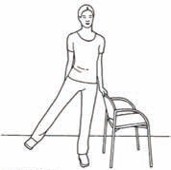
- Stand straight holding on to a support.
- Keeping your back straight.
- Lift your leg sideways.
- Repeat 10 to 15 times.
- Complete two to three sets.
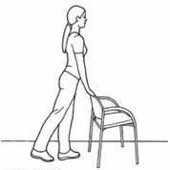
- Stand straight holding on to a support.
- Keeping your back straight.
- Lift your leg backward.
- Repeat 10 to 15 times.
- Complete two to three sets.
Your Health Notts
It is always important to consider other factors that can contribute to musculoskeletal problems and may limit your recovery. The most common factors that can affect your health and wellbeing include smoking, alcohol, weight, stress and general fitness.
There is an excellent resource now available to Nottinghamshire County residents that offers information and guidance on:
- Stopping smoking
- Losing weight
- Alcohol reduction
- Increasing physical activity.
Please visit the Your Health Notts website to find out more or self-refer to this service.
Further sources of information
This document is intended for information purposes only and should not replace advice that your relevant health professional would give you.
External websites may be referred to in specific cases. Any external websites are provided for your information and convenience. We cannot accept responsibility for the information found on them.
Patient Experience Team
The Patient Experience Team (PET) is available to help with any of your compliments, concerns or complaints, and will ensure a prompt and efficient service.
Contact Patient Experience.
Approved
October 2025
Review date
October 2027
Document Id
PIL202510-01-HOS
Service / Department
Musculoskeletal (MSK)
Other formats
Patients who would like this information in an alternative format, or need help communicating with us, please contact our patient experience team.