Patient Information

Lumbar spine stenosis
Print this page
Information in this booklet is intended to be used as a guide. It gives you an idea about how lumbar spine stenosis can be managed.
You should remember that every case is different, and symptoms and management can vary from person to person.
Lumbar spine stenosis is a term that means the narrowing of the spinal canal in your lower back. The spinal canal is the tunnel where the spinal cord sits. This can commonly cause low back pain and/or leg symptoms. It can be painful but is not usually serious, and most patients manage well over time.
Symptoms vary from patient to patient. As well as lower back pain, you may experience numbness or weakness in the legs and buttocks, and sometimes a feeling of unsteadiness. The pain often occurs with walking or standing for a long time and eases when sitting or bending forwards.
You can improve your function and symptoms by changing your activities, improving your hip and back flexibility and improving your general fitness. Using medication will help you to cope with the pain and remain active. Keep your back moving to prevent stiffness.
What is lumbar spine stenosis?
As we get older, our backs go through the natural ageing process, which can cause narrowing (stenosis) of the spinal canal. Spinal stenosis can affect any part of the spine, but is most common in the lower back.
Lumbar spine stenosis is a term used to describe a narrowing of the spinal canal in the lumbar spine (lower back). This can give back and leg pain, or symptoms.
Why me?
Spinal stenosis is very common. In most people, the spinal canal gets narrower as we age.
This is because the joints of the spine get larger due to age-related changes.
This can then reduce the space in the spinal canal, leaving less room for the nerves. Some people are born with a narrow spinal canal, which can increase their risk of developing spinal stenosis.
Spinal stenosis most frequently occurs in those aged 60 years or older.
We know that narrowing of the spinal canal can lead to symptoms of spinal stenosis, but not all patients will experience symptoms. The severity of pain and symptoms will vary from patient to patient.
Symptoms
Some people with spinal stenosis might never have symptoms.
Lumbar stenosis may lead to back and/or leg pain. Patients may experience numbness or weakness in the legs and buttocks, and feelings of unsteadiness in one or both legs. Most typically, the pain occurs with walking and standing for any length of time. This is because the space for the nerves in the spine may be narrowed when we stand upright or lean back.
People with stenosis often find that if they do things such as sit down, bend forwards, cycle or walk leaning on a shopping trolley, their pain is much better. This is because bending forward causes the spinal canal to widen, giving the nerves more space.
Is it serious?
Lower back and leg pain can be painful and cause you to struggle with your normal activities, but it is not usually serious or an emergency.
Cauda Equina syndrome and spinal myelopathy symptoms
These are rare conditions where the spinal cord gets compressed. If you have, or start to get, any symptoms listed below, you should seek urgent medical attention via an Emergency Department (A&E):
Problems going to the toilet, including a new feeling of wanting to empty your bladder but being unable to, continuation of emptying your bladder when you thought you had finished, or incontinence of bladder or bowels.
Tingling or numbness in your genitals, back passage (anus) or upper, inner thighs.
Large reduction in strength and/or coordination of arms and hands, and/or legs.
Unexplained balance problems or unsteadiness in your legs.
New onset of erectile dysfunction.
Diagnosis and investigations
Lumbar spine stenosis is diagnosed from the signs and symptoms that you describe. Assessment of the lumbar spine and nerve function by health care professionals may help to inform this diagnosis.
If the diagnosis is unclear or if surgery or injections are being considered, an MRI scan of the lumbar spine may be arranged. There is often not a strong link between the severity of changes seen on an MRI and the amount of pain you are in.
Will it get better?
Although spinal stenosis can affect your quality of life, it is not necessarily damaging or serious.
You need to continue to use your back and continue walking to keep it strong. Although this may be painful, it will not cause any damage to your spine.
It is difficult to predict what will happen to your symptoms over time, but research suggests that 60% (three in five) of patients with lumbar stenosis will remain the same, often for many decades. 20% (one in five) will report an improvement in symptoms, and 20% (one in five) will feel deterioration in their symptoms over time.
Worsening of symptoms happens slowly and usually means that your walking distance will reduce gradually. Sometimes the nerve supply to the leg(s) will become increasingly affected.
Management
Spinal stenosis can be restrictive and can significantly affect your quality of life. If the symptoms and pain are manageable, then no intervention may be required.
In most instances, the symptoms can be managed through simple treatment that does not require an operation.
There is no cure for this condition, but you can improve your function and symptoms by changing your activities and improving your general fitness. Increasing your knowledge as well as improving hip and spinal flexibility is important to help you manage better over time.
What to avoid
When starting to manage your condition, there are some handy hints that may be temporarily avoided:
Prolonged standing.
Prolonged overhead activities.
Use of heavy backpacks.
Overhead working postures.
Prolonged aggravating activities.
Medication for pain control
Controlling your pain allows you to continue to function and carry out your daily activities more comfortably.
Your GP may have already discussed medication to help with your pain and the correct ways to take pain relief. They may recommend that you take it as a short course rather than ‘as and when’ the pain is bad. This often includes paracetamol, co-codamol (Zapain), and non-steroidal anti-inflammatory medication such as ibuprofen. Please always read the instructions before using these products.
If you have nerve pain, your healthcare professional may also discuss additional medication, which specifically targets nerve pain.
Keep active
By keeping your back moving, you may prevent it from becoming stiff. Even if it is uncomfortable, you are not causing any damage. It is important to remember that ‘hurt does not mean harm’.
Physiotherapy
After an assessment, physiotherapy may be offered. Exercise therapy is an important part of the management of this condition.
This includes spinal mobility and back flexion exercises, hip mobility and a comprehensive strengthening programme. Aerobic exercise is also encouraged, such as cycling and water- based exercise.
If using a treadmill, then an inclined position is recommended; you can lean forward and hold on to the bars. Pace your activities, for example, the amount you walk before resting. You may like to try a ‘Nordic’ pole/stick.
Other treatments
If symptoms remain unmanageable despite trying all the treatment options, or your leg symptoms continue to cause a severe restriction in your mobility, spinal injections can sometimes be used to help settle the pain.
Local anaesthetic and steroids are injected to settle any inflammation. Nerve root blocks, epidurals or facet joint injections may be offered to you, depending on your MRI findings and correlated symptoms.
You will need to be referred to pain management or the spinal team to discuss this.
Spinal surgery
Spinal surgery for lumbar stenosis is usually a lumbar decompression. This is where the bone that is compressing the nerves is removed to give the nerve more space.
Generally, surgery is more likely to help with leg pain more than back pain. It is difficult to say if surgery will benefit you, and it is unlikely to resolve all of your symptoms.
Successful effects of surgery are most noticeable after three to six months. Improvements appear to remain consistent for up to four years. Surgery can lead to a 60% improvement.
Surgery may be considered in the following patients:
Patients who have no improvement with conservative treatment in three to six months.
Patients who have moderate to severe symptoms with definite spinal stenosis confirmed via MRI.
Patients who have a significant reduction in quality of life.
Patients who are medically fit and well, with no other significant health problems.
Exercises
There are some examples of basic exercises that you may wish to try. Begin with a small number of repetitions, perhaps five to 10 of each exercise and build this up gradually. It is okay to feel a stretch in your spine while doing the exercises. Try to add these to your daily routine.
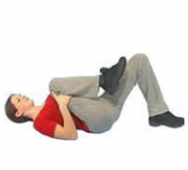
Slowly bring one knee towards your chest and assist with your arms. Feel the stretch in your buttock and low back. Repeat on the other leg.
If this is difficult use a towel under your thigh and assist with your arms.
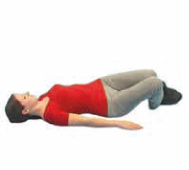
Gently rotate your knees from one side to the other. Feel the stretch in the lower back and side.
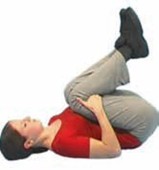
Bring both knees into your chest. Feel the stretch in your lower back. Return your feet back to the start position.
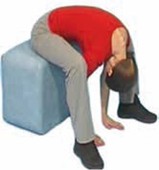
Bend forwards by rolling your spine down. Slide your hands towards your ankles. Feel the stretch in your lower back.
Your Health Notts
It is always important to consider other factors that can contribute to musculoskeletal problems and may limit your recovery. The most common factors that can affect your health and wellbeing include smoking, alcohol, weight, stress and general fitness.
There is an excellent resource now available to Nottinghamshire County residents that offers information and guidance on:
- Stopping smoking
- Losing weight
- Alcohol reduction
- Increasing physical activity.
Please visit the Your Health Notts website to find out more or self-refer to this service.
Further sources of information
This document is intended for information purposes only and should not replace advice that your relevant health professional would give you.
External websites may be referred to in specific cases. Any external websites are provided for your information and convenience. We cannot accept responsibility for the information found on them.
Patient Experience Team
The Patient Experience Team (PET) is available to help with any of your compliments, concerns or complaints, and will ensure a prompt and efficient service.
Contact Patient Experience.

Approved
October 2025
Review date
October 2027
Document Id
PIL202510-01-LSS
Service / Department
Musculoskeletal (MSK)
Other formats
Patients who would like this information in an alternative format, or need help communicating with us, please contact our patient experience team.